Blog

  • How much does Google Ads cost?

    How much does Google Ads cost?

    [vc_row row_height_percent=”100″ override_padding=”yes” h_padding=”2″ top_padding=”5″ bottom_padding=”5″ back_color=”color-jevc” back_image_auto=”yes” overlay_alpha=”20″ gutter_size=”3″ column_width_percent=”100″ shift_y=”0″ z_index=”0″ enable_bottom_divider=”default” bottom_divider=”gradient” shape_bottom_h_use_pixel=”true” shape_bottom_height_percent=”100″ shape_bottom_color=”color-jevc” shape_bottom_opacity=”30″ shape_bottom_index=”0″ uncode_shortcode_id=”476601″ back_color_type=”uncode-palette” shape_bottom_color_type=”uncode-palette”][vc_column column_width_percent=”100″ position_vertical=”middle” align_horizontal=”align_center” gutter_size=”2″ style=”dark” font_family=”font-136269″ overlay_alpha=”50″ shift_x=”0″ shift_y=”0″ shift_y_down=”0″ z_index=”0″ medium_width=”0″ mobile_width=”0″ width=”1/1″ uncode_shortcode_id=”196706″][uncode_info_box items=”Categories,Date,Reading_time” text_size=”h4″ separator=”bullet”][vc_custom_heading auto_text=”yes” heading_semantic=”h1″ text_font=”font-136269″ text_size=”fontsize-445851″ uncode_shortcode_id=”348632″]Automatic Heading Text[/vc_custom_heading][vc_empty_space empty_h=”0″][uncode_info_box items=”Author|no_avatar|inline_avatar|display_prefix” text_size=”h4″][/vc_column][/vc_row][vc_row row_height_percent=”0″ override_padding=”yes” h_padding=”2″ top_padding=”4″ bottom_padding=”0″ overlay_alpha=”100″ gutter_size=”3″ column_width_percent=”100″ shift_y=”0″ z_index=”0″ row_height_use_pixel=”” uncode_shortcode_id=”282890″][vc_column column_width_use_pixel=”yes” align_horizontal=”align_center” gutter_size=”3″ font_family=”font-136269″ overlay_alpha=”50″ shift_x=”0″ shift_y=”0″ shift_y_down=”0″ z_index=”0″ medium_width=”0″ mobile_width=”0″ zoom_width=”0″ zoom_height=”0″ column_width_pixel=”800″ uncode_shortcode_id=”110955″][vc_column_text text_lead=”yes” uncode_shortcode_id=”207398″]As per analytics shared by Search Engine Researchers, companies spend anywhere from $10,000 to more than $30,000 per month on Google Ads (previously known as Google AdWords), which maintains an average cost-per-click (CPC) of $1 to $2 for the Google Search Network and less than $1 for the Google Display Network.

    Your cheat sheet to Google Ads pricing

    In a rush? Use our cheat sheet to Google Ads pricing for a summary:

    How much does it cost to advertise on Google?

    The average cost to advertise on Google depends on factors like your industry, campaign targeting, and ad network. For example, the average CPC for the Google Search Network is $1 to $2 while the average CPC for the Google Display Network is $1 or less.

    What determines Google Ads’ costs?

    The following factors determine Google Ads’ costs:

    1. Quality Score
    2. Ad Rank
    3. Campaign and ad settings, like budget, bid, keywords, and targeting
    4. Industry
    5. Google Ad network
    6. PPC tools and services

    What costs from Google Ads can I expect?

    Typically, businesses can expect the following costs from Google Ads:


    How does Google Ads’ pricing work?

    Google Ads’ pricing — or how much Google charges your company directly — depends on:

    1. Your campaign settings, like your budget and bid
    2. Your performance in the Google ad auction, which involves Quality Score and Ad Rank

    As a quick summary, the Google ad auction uses your Quality Score (which considers your ad’s relevance, landing page, and past performance) and your bid to generate its Ad Rank. Your Ad Rank determines your ad’s placement and ad’s cost-per-click.

    In most cases, industries with a higher CPC spend more on Google Ads.

    The consumer services sector, for example, pays an average of almost $7 per click, which can move businesses in the industry to increase their monthly Google Ads spend.

    What is Google Ads?

    Google Ads, previously called Google AdWords, is Google’s PPC advertising platform.

    You can use it to create advertisements, bid on specific keywords, and determine how much you’re willing to pay for every click on your advertisement because Google Ads operates on an auction system, which happens in real-time.

    When users search for a keyword you’ve selected, if your bid is higher than what other advertisers bid on that keyword, your advertisement will appear at the top of the search results with a small tag next to it indicating that it’s a paid result.
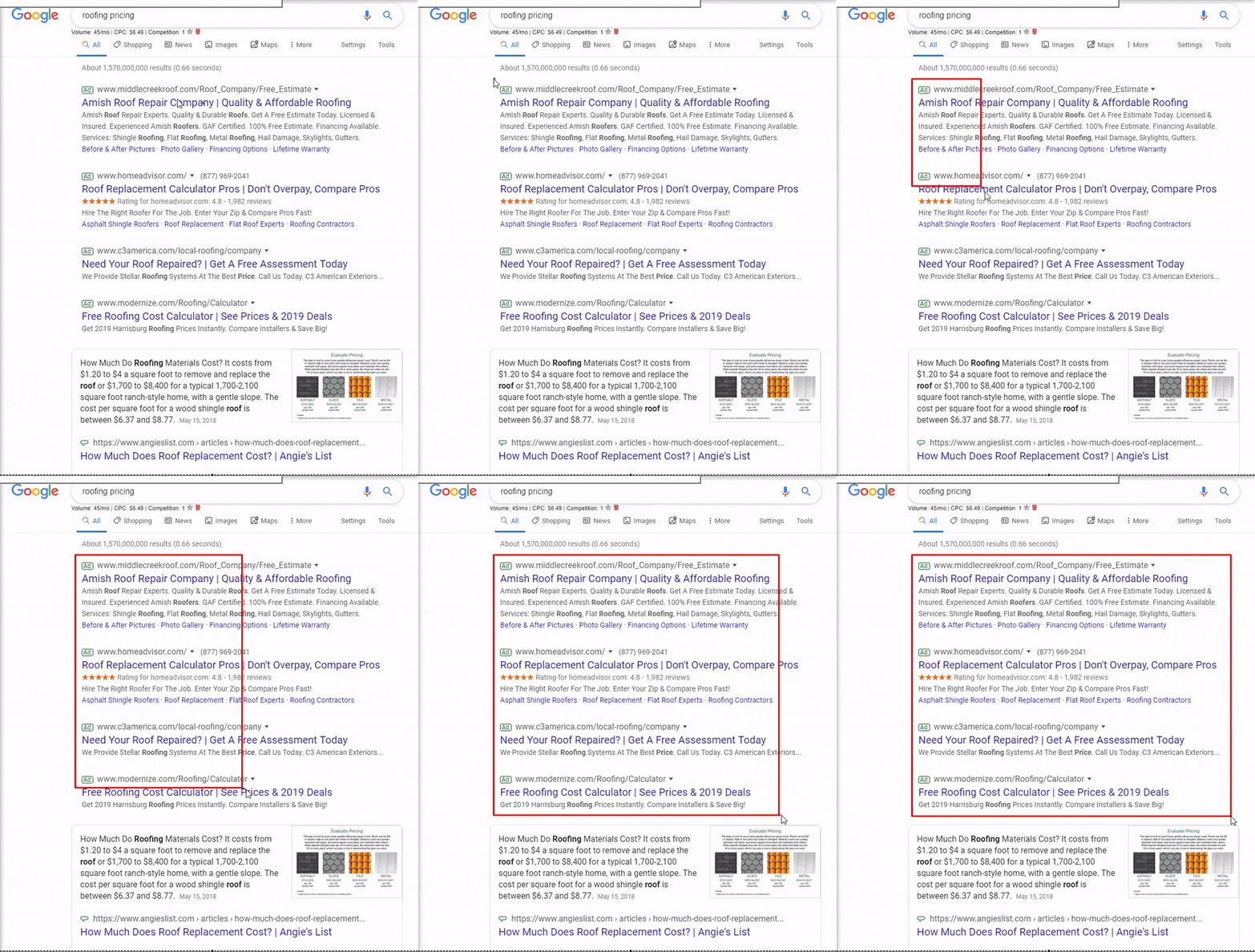
    The best part of Google PPC costs is that you only pay when a user actually clicks on your ad. It doesn’t matter how many times it’s displayed or how many people see it — you only pay when someone clicks and visits your website.

    You can also set daily and monthly budgets on a campaign-by-campaign basis. So, after you find a winning keyword to bid on and a winning ad to run, you can let your campaign run knowing that you won’t go over a specific budget.

    Need help creating your Google Ads budget?

    While most companies spend $9000 to $30,000 per month on Google Ads, there isn’t a definitive answer to the question, “How much does Google Ads cost?” and that’s for good reason.

    How much you spend on Google Ads is entirely up to you. The right Google Ads spend for your business depends on numerous factors, including ad performance, your industry, your goals, the tools you decide to use, and more.

    Whatever approach you decide to take, Google Ads is a fantastic advertising method for almost any business out there. Worst case scenario, you might lose some of your budget on an unsuccessful test campaign.

    But when you realize what you stand to gain from a successful Google Ads campaign, you’ll be asking why you didn’t give it a shot sooner! If you’re looking for help building your Google Ads budget, as well as developing your campaign, our PPC management services for Google Ads can help.

    Just contact us online or call us at +91 91377 81722 to speak with an experienced strategist about Google Ads pricing for your business![/vc_column_text][/vc_column][/vc_row]

  • Starting an Online Clothing Store

    Starting an Online Clothing Store

    [vc_row row_height_percent=”100″ override_padding=”yes” h_padding=”2″ top_padding=”5″ bottom_padding=”5″ back_color=”color-jevc” back_image_auto=”yes” overlay_alpha=”20″ gutter_size=”3″ column_width_percent=”100″ shift_y=”0″ z_index=”0″ enable_bottom_divider=”default” bottom_divider=”gradient” shape_bottom_h_use_pixel=”true” shape_bottom_height_percent=”100″ shape_bottom_color=”color-jevc” shape_bottom_opacity=”30″ shape_bottom_index=”0″ uncode_shortcode_id=”476601″ back_color_type=”uncode-palette” shape_bottom_color_type=”uncode-palette”][vc_column column_width_percent=”100″ position_vertical=”middle” align_horizontal=”align_center” gutter_size=”2″ style=”dark” font_family=”font-136269″ overlay_alpha=”50″ shift_x=”0″ shift_y=”0″ shift_y_down=”0″ z_index=”0″ medium_width=”0″ mobile_width=”0″ width=”1/1″ uncode_shortcode_id=”196706″][uncode_info_box items=”Categories,Date,Reading_time” text_size=”h4″ separator=”bullet”][vc_custom_heading auto_text=”yes” heading_semantic=”h1″ text_font=”font-136269″ text_size=”fontsize-445851″ uncode_shortcode_id=”594447″]Automatic Heading Text[/vc_custom_heading][vc_empty_space empty_h=”0″][uncode_info_box items=”Author|no_avatar|inline_avatar|display_prefix” text_size=”h4″][/vc_column][/vc_row][vc_row row_height_percent=”0″ override_padding=”yes” h_padding=”2″ top_padding=”4″ bottom_padding=”0″ overlay_alpha=”100″ gutter_size=”3″ column_width_percent=”100″ shift_y=”0″ z_index=”0″ row_height_use_pixel=”” uncode_shortcode_id=”282890″][vc_column column_width_use_pixel=”yes” align_horizontal=”align_center” gutter_size=”3″ font_family=”font-136269″ overlay_alpha=”50″ shift_x=”0″ shift_y=”0″ shift_y_down=”0″ z_index=”0″ medium_width=”0″ mobile_width=”0″ zoom_width=”0″ zoom_height=”0″ column_width_pixel=”800″ uncode_shortcode_id=”110955″][vc_column_text text_lead=”yes” uncode_shortcode_id=”536470″]If you are keen to open an online clothing shop then you have the right decision to get this exciting niche. Ecommerce provides you with a perfect way to begin a business with minimum overhead and trading apparel online has proven to be profitable enough. Its revenue is $89 billion-a-year. According to the Statista website, apparel of any kind and accessories goods in the online retail sector is going to bring $149 billion by 2022.

    Nevertheless, just pondering on the shop and beginning to run it are two opposite things. The world where you have a high-demand branch that is adored by clients is easy to imagine, but it takes a lot of time and effort to reach this point.

    So, you have to hold in mind some details on how to establish and run a successful clothing shop business online. There is no silver bullet but there is a guide for success. It is wrapped in getting an apparel niche, delivering incredible customer service, and searching for the most appropriate eCommerce solution.

    In this article, we will give the answers on what must be done to begin a clothing business without even a minimal wasting of budget and time.

    Selling Clothes Online vs Offline 

    Ecommerce is a new mainstream in the clothing and retail industry itself. There are more benefits in selling clothes online than doing it offline. This is not a discovery that offline shops are getting weaker and it’s hard for them to compete with online shops nowadays. According to the data, eCommerce holds more than 28% of the market share, and the percentage is growing up from year to year.

    Let’s have a look at the benefits of selling online:

    1. Ecommerce sites are opened 24/7 in comparison to offline stores. So online sellers get a chance to let the business work with no days off, lunch breaks, and public holidays.
    2. A very low entry-level is the top advantage of selling online. It may require only a couple of days to establish a storefront page. In comparison to online stores, it will take much more time and slightly more money to begin offline trading.
    3. The customers’ preferences, interests, and interactions can be monitored and tracked easily with modern analytic tools like Mixpanel, Amplitude, or popular Google Analytics.
    4. Buying online is more adorable as it allows buying and getting goods even staying at home.

    Steps to Follow to Start an Online Clothing Store

    Before you begin filling the goods for sale, you should make research. To move correctly from the get-go, you need a stable foundation. We share seven steps to follow which will assist you in starting a successful online clothing shop:

    1. Select an apparel niche,
    2. Define a plan for the business,
    3. Choose an eCommerce platform,
    4. Choose a hosting provider and domain name,
    5. Choose apparel store template and customize online store,
    6. Add goods and services,
    7. Go live and market the store.

    Clothing Store Business Models

    There exist four business models for online clothing shops. Among them are the following: private label clothing, dropshipping, custom cut-and-sew, and print-on-demand. We would say every type has its pros and cons. We will review each of them and this way you will be able to determine which of them will perform the best for your future online clothing store.

    Dropshipping

    Dropshipping is very close to print-on-demand because it gives you the ability to sell apparel from wholesalers. This model is the best for budget-saving as there is no need to buy products beforehand, store them, pack or ship.

    An essential benefit of the drop-shipping store that it doesn’t require to have any capital to launch. Nevertheless, the drop-shipping model also has cons. You cannot develop your unique brand since so many stores provide the same products as you do.

    Private label clothing store

    Working with this business model, first of all, you should stay focused on a certain product line and then search for a private label-clothing partner to produce your apparel. With such a type of model of business, your work and expenses are lower than cut-and-sew, but along with it, you get more customization than print-on-demand.

    We can explain that the private label business model is like a process of purchasing label-less clothing things and then you add your label.

    Just like any other model, this one also has cons. You get additional responsibility to deal with inventory management and fulfillment. Although, this is possible to easily optimize via ecCmmerce platforms.

    A clothing line from scratch

    For those who want to start their branch of apparel, this business model will be a nice fit.

    The biggest advantage of its apparel line from the scratch business model is a chance to start a prominent and unique online clothing store.

    Nevertheless, the apparel line from scratch as a business model also has cons. Its biggest disadvantage is in the number of management which is necessary. The responsibility of searching for coordinating the pattern makers and manufacturers and sourcing the fabric will rest on your shoulders. This is a complicated deal you will have to solve and find a long-term partner to produce the clothing.

    Print-on-demand

    If the main goal is to start an online clothing shop in a faster way within a low budget, this model is proven by time as the best one. As the only one thing that is done by the firm is printing provided design on a blank version of products (t-shirts, jeans, hats, or any merchandise things) utilizing a digital ink-jet printer, print-on-demand is fairly thought out as the simplest business model for a start.

    The biggest pros of the print-on-demand business model are being the simple and low price of implementation. It is suitable for small companies with a small number of orders.

    How to Select an Ecommerce Platform For a Clothing shop?

    We would like to list many details that must be taken into account when you want to choose an eCommerce platform for an online store. We advise you to pay close attention to the next:

    1. Size of stock,
    2. Open-source solution or SaaS,
    3. Plan of platform payment.
    4. The volume of traffic,
    5. Payment gateway

    It will become much simpler to choose the solution that is the most appropriate for your business after reviewing these parameters.

    Below we describe the details related to the Magento platform, which proved itself to be great for a successful run on an online clothing shop.

    Magento

    It is an eCommerce platform with an open-source codebase that is a nice fit for both small, middle, and enterprise businesses. Magento is called a nice choice if you expect your website to handle large traffic and a big amount of products. This platform is a maintainable and stable choice for creating clothing boutiques online. The proof of it is that Magento is utilized by well-known brands, such as Huawei, Pepe Jeans, and Burger King.

    Magento is available in two editions and the cost varies accordingly:

    • Magento Open Source is free of charge,
    • Magento Commerce. Its price starts from $1988.00 per month. It doesn’t have a free version but offers a free trial.

    The significant detail is that you will have to hire developers familiar with eCommerce that will help you to create and release a Magento-based fashion boutique. This is needed because of serious technical management for this platform.

    Speaking about the Magento website development, you should remember that it depends on the features you want it to include. Moreover, there exist some levels of complexity, which we will review:

    • A store operating within one country and which has one target audience. The price of such a store varies from $ 6,000 to $10,000,
    • Several similar sites for various countries, in various languages. In this case the cost will vary from $11,000 to $20,000,
    • An eCommerce platform like eBay. Such a platform has the highest development price and its cost starts from $ 20,000.

    Best Practices for Your Online Clothing Store

    To make your business successful and keep growing, one of the most essential details that should be done is following the best practices. So, we advise you to do the next things:

    • 1. Simplify top and sidebar menus,
    • 2. Take SEO as a priority,
    • 3. Have web design friendly,
    • 4. Provide PayPal, Credit card payment methods,
    • 5. Run ads where your audience is hanging out.

    Conclusion & Tip

    Launching any kind of business can be a hard initiative, but there is no hesitation that the online market of apparel is a great place to be. Having a confident and detailed plan for your business and using a stable and flexible eCommerce platform gives you a chance to make your dream come true.

    For more information about how to start a clothing company online or in case, you need a more accurate and detailed estimation, feel free to contact us![/vc_column_text][/vc_column][/vc_row]

  • How Smartphones are Changing the eCommerce Scenario

    How Smartphones are Changing the eCommerce Scenario

    [vc_row row_height_percent=”100″ override_padding=”yes” h_padding=”2″ top_padding=”5″ bottom_padding=”5″ back_color=”color-jevc” back_image_auto=”yes” overlay_alpha=”20″ gutter_size=”3″ column_width_percent=”100″ shift_y=”0″ z_index=”0″ enable_bottom_divider=”default” bottom_divider=”gradient” shape_bottom_h_use_pixel=”true” shape_bottom_height_percent=”100″ shape_bottom_color=”color-jevc” shape_bottom_opacity=”30″ shape_bottom_index=”0″ uncode_shortcode_id=”476601″ back_color_type=”uncode-palette” shape_bottom_color_type=”uncode-palette” shape_dividers=””][vc_column column_width_percent=”100″ position_vertical=”middle” align_horizontal=”align_center” gutter_size=”2″ style=”dark” font_family=”font-136269″ overlay_alpha=”50″ shift_x=”0″ shift_y=”0″ shift_y_down=”0″ z_index=”0″ medium_width=”0″ mobile_width=”0″ width=”1/1″ uncode_shortcode_id=”196706″][uncode_info_box items=”Categories,Date,Reading_time” text_size=”h4″ separator=”bullet”][vc_custom_heading auto_text=”yes” heading_semantic=”h1″ text_font=”font-136269″ text_size=”fontsize-445851″ uncode_shortcode_id=”594447″]Automatic Heading Text[/vc_custom_heading][vc_empty_space empty_h=”0″][uncode_info_box items=”Author|no_avatar|inline_avatar|display_prefix” text_size=”h4″][/vc_column][/vc_row][vc_row row_height_percent=”0″ override_padding=”yes” h_padding=”2″ top_padding=”4″ bottom_padding=”0″ overlay_alpha=”100″ gutter_size=”3″ column_width_percent=”100″ shift_y=”0″ z_index=”0″ row_height_use_pixel=”” uncode_shortcode_id=”282890″][vc_column column_width_use_pixel=”yes” align_horizontal=”align_center” gutter_size=”3″ font_family=”font-136269″ overlay_alpha=”50″ shift_x=”0″ shift_y=”0″ shift_y_down=”0″ z_index=”0″ medium_width=”0″ mobile_width=”0″ zoom_width=”0″ zoom_height=”0″ column_width_pixel=”800″ uncode_shortcode_id=”110955″][vc_column_text text_lead=”yes” uncode_shortcode_id=”164407″]Smartphones rule the world. They’ve simplified many aspects of our lives, it’s honestly difficult to imagine our reality without something like GoogleMaps, for example. If you own a smartphone, you can do virtually anything on it: make appointments, gamble, and have food delivered to you on the beach. Everything is at your disposal, it’s exciting and overwhelming at the same time!

    Of the many, many things that you can do with your smartphone, one of the biggest explosions we’ve seen is online shopping. It has grown at an incredible rate in recent years and while shopping online is great from a desktop, shopping from a smartphone or tablet (also known as “m-commerce”, a branch of e-commerce) is quickly becoming an equally popular option for users all around the world.

    Computers ran so smartphones could fly

    It is estimated that there are 5.22 billion mobile users around the world, and that number keeps growing! Multiply that by however many hours (too many for sure) they spend on their phones a day and you have a very exciting and enticing market at your fingertips. For now, e-commerce through desktop is still more widely used than m-commerce, but in our humble opinion, not for much longer.

    Just to give you an idea, the projection for total mobile commerce revenue generated in 2021 is set to be around $3.56 trillion. To us, that is a mind-boggling number! M-commerce is here to stay and will only keep growing as smartphone users increase daily.

    The effect of m-commerce is so big that social media platforms like Instagram, Facebook, and Twitter have adjusted to and implemented the ability to make purchases directly from their platforms, making transactions that much easier for consumers. Google, Amazon, and Apple have also hopped on the m-commerce train and provide “wallets” for users that can be set up through a smartphone and allow for easy online purchases.

    Convenience is king

    How did we get here, you ask? Ordering products from a smartphone is faster and more convenient than from a desktop. It’s pretty hard to beat a device that makes it possible to order almost anything you need from anywhere you are.

    Despite numbers such as the ones described above, many businesses still rely on websites designed solely for desktops. Given the huge market, not taking the time to have a mobile-optimized site is definitely costing any company money.

    Back in the day, Google found that companies whose websites were not mobile-friendly resulted in potential consumers being less incentivized to buy. Imagine now in 2021 how much more important it is to get this right! It is just simply not an option to have a website that is only optimized for desktops. Users want it and businesses need it if they want to stay competitive.

    The road to seamlessness 

    Just like with anything new, many improvements still need to be made to the smartphone shopping experience. Some mobile sites can be very glitchy and not UX optimized, buttons are too small or in strange places (you have to think about the physical interaction that a user is having with your mobile site), are not responsive (meaning they do not adjust from desktop-sized screens to smartphone screen sizes well) and sometimes, there simply isn’t enough information available to the user. This leads them to question whether they are making an informed and secure purchase.

    All of these factors add frustration from the user’s point of view (we can attest to this). This results in the user abandoning a mobile site altogether. A well-designed mobile site needs to take all of these factors into consideration and have a good page overview, meaning that it is easy for the user to navigate and locate the information that they are looking for seamlessly.

    Despite being glitchy at times, the numbers don’t lie. More and more consumers are turning to their smartphones to make purchases, meaning that eCommerce isn’t going anywhere but up.

    If you are looking for a partner to help you design an awesome user-centric mobile website, look no further than WebsiteMatters. We love creating beautiful and cohesive designs that continue to engage and wow users across all interfaces. If you are interested, let’s chat!  [/vc_column_text][/vc_column][/vc_row]

  • A Perfect eCommerce Checkout Experience?

    A Perfect eCommerce Checkout Experience?

    [vc_row row_height_percent=”100″ override_padding=”yes” h_padding=”2″ top_padding=”5″ bottom_padding=”5″ back_color=”color-jevc” back_image_auto=”yes” overlay_alpha=”20″ gutter_size=”3″ column_width_percent=”100″ shift_y=”0″ z_index=”0″ enable_bottom_divider=”default” bottom_divider=”gradient” shape_bottom_h_use_pixel=”true” shape_bottom_height_percent=”100″ shape_bottom_color=”color-jevc” shape_bottom_opacity=”30″ shape_bottom_index=”0″ uncode_shortcode_id=”149201″ back_color_type=”uncode-palette” shape_bottom_color_type=”uncode-palette”][vc_column column_width_percent=”100″ position_vertical=”middle” align_horizontal=”align_center” gutter_size=”2″ style=”dark” font_family=”font-165032″ overlay_alpha=”50″ shift_x=”0″ shift_y=”0″ shift_y_down=”0″ z_index=”0″ medium_width=”0″ mobile_width=”0″ parallax_intensity=”4″ parallax_centered=”yes” width=”1/1″ uncode_shortcode_id=”718693″][uncode_info_box items=”Categories,Date,Reading_time” text_size=”h4″ separator=”bullet”][vc_custom_heading auto_text=”yes” heading_semantic=”h1″ text_font=”font-165032″ text_size=”fontsize-445851″ uncode_shortcode_id=”202823″]Automatic Heading Text[/vc_custom_heading][vc_empty_space empty_h=”0″][uncode_info_box items=”Author|no_avatar|inline_avatar|display_prefix” text_size=”h4″][/vc_column][/vc_row][vc_row unlock_row=”” row_height_percent=”0″ override_padding=”yes” h_padding=”2″ top_padding=”4″ bottom_padding=”4″ overlay_alpha=”50″ gutter_size=”3″ column_width_percent=”100″ shift_y=”0″ z_index=”0″ row_height_use_pixel=”” uncode_shortcode_id=”104306″][vc_column column_width_use_pixel=”yes” gutter_size=”3″ font_family=”font-136269″ overlay_alpha=”50″ shift_x=”0″ shift_y=”0″ shift_y_down=”0″ z_index=”0″ medium_width=”0″ mobile_width=”0″ zoom_width=”0″ zoom_height=”0″ column_width_pixel=”800″ uncode_shortcode_id=”759812″][vc_column_text text_lead=”yes” uncode_shortcode_id=”155184″]A simple and customer-centric checkout experience holds the key to the success of your eCommerce store. It leads to return customers, positive reviews, and the growth of your business.

    Top brands in eCommerce have mastered the art of personalizing every stage of the shopping experience for their customers. From marketing strategies, to ordering, to delivery, every step is geared to create a positive and consistent experience for shoppers.

    A huge investment in eCommerce goes into creating a user-friendly website interface. However, many merchants are still unable to leverage technology to perfect the checkout experience.

    To satisfy customer demands, a checkout system must be:

    • Mobile friendly with social media integrations
    • User friendly with a live chat for customer assistance
    • Secure with multiple payment options

    Here, we’ll learn about the importance of the checkout experience and how you can perfect it to increase your sales revenue and rank alongside the big players.

    How the Checkout Experience Determines the Success of an Ecommerce Store

    An optimized checkout is the core component of your success as an eCommerce investor. It satisfies customer expectations and increases the visitor-to-buyer conversion rate.

    After customers have loved the product, a seamless buying process at the checkout increases the chances of them completing the purchase.

    If the checkout process is tedious and inconvenient, the buyer simply terminates the process at checkout. This is also known as checkout abandonment and is responsible for sales decline and negative customer reviews.

    What Is Checkout Abandonment?

    Checkout abandonment is where customers abandon the shopping process after they’ve initiated checkout.

    Checkout abandonment is not the same as cart abandonment.

    Cart abandonment is where customers stop the buying process before they get to checkout.

    difference between cart abandonment and checkout abandonment

    On average, one in five Americans have abandoned an order at the checkout due to a tedious and inconvenient process.

    Checkout abandonment distorts the perfect checkout flow, and if it’s too high (60% and above), can lead to the collapse of profitability for your store.

    Reasons for Checkout Abandonment

    Online shoppers have limited patience for a complex and tedious checkout experience.

    The table below shows the most common reasons for checkout abandonment alongside customer expectations.

    How to Perfect the Checkout Process in Your Online Store

    To combat checkout abandonment and improve the performance of your online store, you have to make the checkout experience as painless as possible.

    The eCommerce platform hosting your store hugely determines the user interface and how easy it is to use. However, there are different ways that you can create a positive experience for your shoppers during checkout.

    Create a Mobile-Friendly Checkout With Social Account Sign In

    Most online marketing campaigns are implemented through social media channels. This means that most customer acquisition is done via mobile devices.

    Creating a mobile-friendly checkout means having integrations that lead shoppers from browsing social media to the product page and an easy checkout.

    For example, FashionNova, a leading apparel eCommerce store has a tap-to-shop link that guides shoppers from Instagram straight to checkout.

    Enabling such integrations helps you bag customers who are impressed with your products but have a very limited attention span.

    FashionNova mobile-friendly checkout experience

    Offer Multiple Payment Methods and Upfront Transparency With Shipping Costs

    One mistake that causes shoppers to abandon their carts during checkout is expensive shipping costs and the unavailability of their preferred payment methods.

    For example, let’s say you want to buy an air fryer because you’ve been seeing some amazing recipes on YouTube or TikTok and you’d love to try. You find it at an online store and start the checkout process.

    Once you see the shipping cost and taxes you’re unimpressed. You’ll probably look for another store or decide to forget the whole idea.

    As an eCommerce store owner, you should give the total product costs with the estimated shipping costs upfront. Nobody likes surprises, especially when they involve extra charges.

    Also, provide different payment options on your online store to enable more customers an easy buying experience.

    various payment options you can offer your shoppers

    Allow Guest Checkout

    Mandatory account creation when checking out is a major problem causing checkout abandonment. Not everyone is interested in creating an account with every shop they buy from.

    Allowing guest checkout is an amazing way to deal with this.

    Now, you may still need shoppers’ information for marketing campaigns and customer outreach. The best way to encourage them to create an account is to highlight the benefits of having one.

    For example, someone may be in love with your brand and needs the heads up when you’re launching a product. If they’re super interested, they’ll create an account without hesitation.

    The key is to give customers the option to have an account or not to have one.

    Nixon, a top watch brand, is a good example that offers shoppers the option to create an account.

    optional account creation on Nixon website

    Asking shoppers for unnecessary information could lead to checkout abandonment because they:

    • Don’t want to feel committed to your store
    • Don’t want to leave their credit card information with your store
    • Find account creation tedious and time-consuming

    Accelerate the checkout experience to give your shoppers satisfaction and they’ll keep coming back.

    Guarantee Security and Offer Customer Support

    Shoppers need assurance for the security of their credit card information and are hesitant to trust anyone online.

    First and foremost, your eCommerce platform should offer security for customers’ information and secure your business from fraudsters.

    For example, Shopify Plus is compliant with the Payment Card Industry Data Security Standard (PCI compliant) and guarantees security for your business and your customers.

    Secondly, you can display badges on the checkout page of your store to assure potential customers that all your processes are secure.

    The use of trust badges helps establish visual security in the checkout flow.

    security badges in action

    In instances where customers may still need further support during checkout, enable a call option or a live chat. This will help build customer confidence in your store and reduce the rate of checkout abandonment.

    How You Can Use Technology to Create a Perfect Checkout Experience

    To be in line with the big players, you have to invest in integrations that help customers throughout the shopping process.

    With customer expectations at an all-time high, you as a merchant must enable a convenient and safe checkout to grow your business.

    To improve the checkout experience, you’ll have to incorporate integrations at checkout that:

    • Give the correct estimates
    • Assure security of credit card information
    • Offer support

    We  at “WebsiteMatters” provide premium developer and maintenance services for eCommerce stores.[/vc_column_text][/vc_column][/vc_row]

  • G Suite Legacy Free Edition to end by June 27, 2022

    G Suite Legacy Free Edition to end by June 27, 2022

    Google recently made an announcement to end the Free Business Email subscription by June 27, 2022. In case if you are wondering which free edition, we are talking about the free business emails being offered by Google way before 2012. Yes. Prior to 2012, Google use to offer 10 business email (each email worth 15 GB space) to a single domain free of cost.

    This Free legacy scheme ended in December 2012, when Google started charging for all the new business emails that were being issued. However, the businesses that had already registered their emails under Free Legacy edition were allowed to continue the businesses with same free emails till recently.

    In January 31, 2022, Google announced and informed all the Free Legacy users that their free legacy edition will end by June 2022. Below is the screenshot of the email sent by Google to its users.

    What steps need to be taken:

    Well, Google informs that the users who are still using the Free Legacy Edition upgrade to Google Workspace. This needs to be done before June 27 (the timeline has been extended from May 1 to June 27). One needs to login to the admin console and setup the billing for the upgrade. Failing to do so will result in suspension of the emails.

    There is practically no middle way to ensure free business email services from Google.

    Still looking for Free Business Emails?

    However, to those who are still looking forward to free business emails, there are few other companies who provide these services, with Zoho leading the way. The Forever Free plan of Zoho, provides businesses with 5 business emails with storage of 5 GB each. You can also check other service providers to shortlist the one which suits your business needs.

    What Resurgam recommends?

    To all our customers and audience reading this blog, we at Resurgam “RECOMMEND TO CONTINUE YOUR GSUITE SUBSCRIPTION AND UPGRADE FOR AN ENHANCED BUSINESS EXPERIENCE.”  The benefits offered by the Google Workspace is worth the price being paid. The ad free email experience with 30 GB of cloud storage per user along with synchronization of utility apps like Google Chat, Google Meet, Google Calendar etc. is an amazing deal offered by Google.

    In case if you are a new user, consider purchasing Google Workspace Subscription to enhance your professional experience. You can buy the subscription here>>